| Home | About Nancy | Bodywork - Equine | Bodywork - Canine | Products | Case Studies |
| Scrapbook | Around the Stables | Published Articles | Links | Contact Us | |
 |
|||||
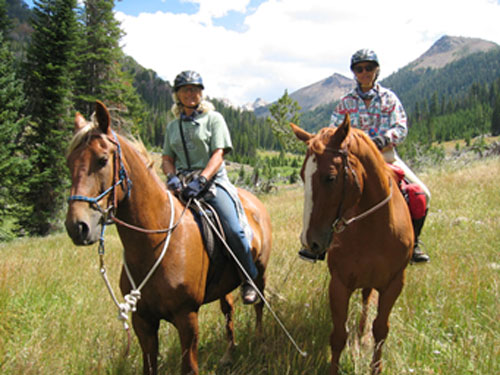
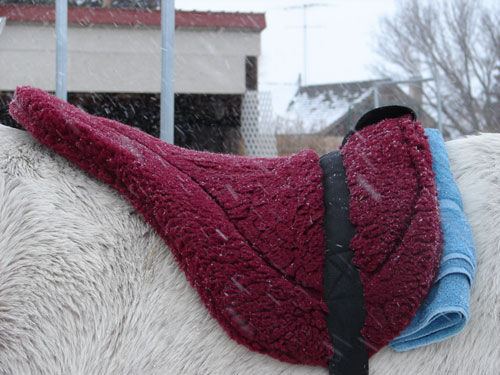
Whole Horse Riding I want my horses happy, comfortable and attentive. I insist that the balance of teeth and feet and all body issues be addressed, and that equipment be kept to a minimum. What equipment s used must fit comfortably no matter what discipline of riding is being pursued, both in and outside of an arena. My background in traditional dressage and jumping found a new path when I met Peggy Cummings in 1995 and trained as a Connected Riding® instructor. I have since studied the applications of the Feldenkrais® method to horsemanship with Robert Spencer, who is a Guild Certified Feldenkrais Teacher. The Feldenkrais Method® of somatic education is one of the most powerful awareness training methods available today. In EquiMotion workshops riders use this awareness to fine-tune posture and motion. It is possible to approach feelings of weightlessness, with no grasping of legs or arms, a state of relaxation in motion that is full of vitality and ease. In this state:
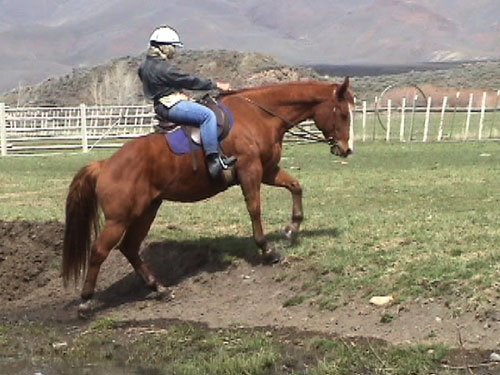 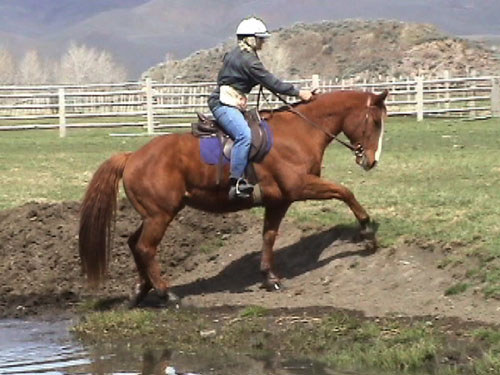 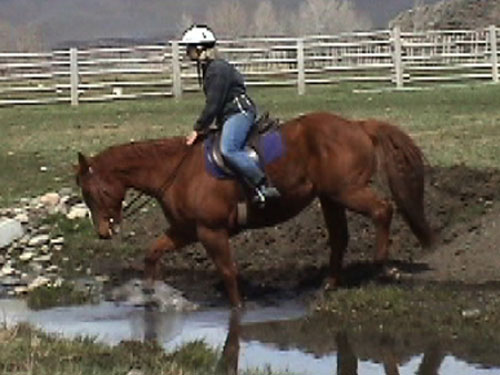 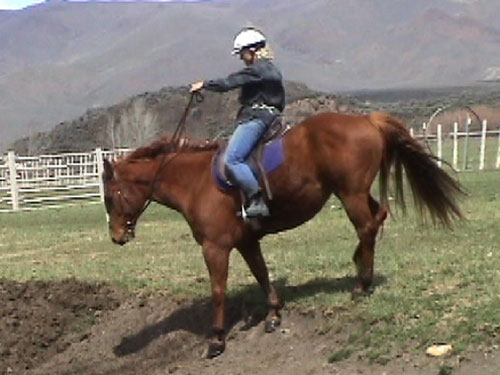    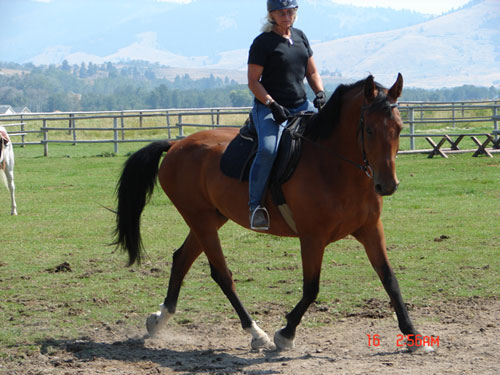 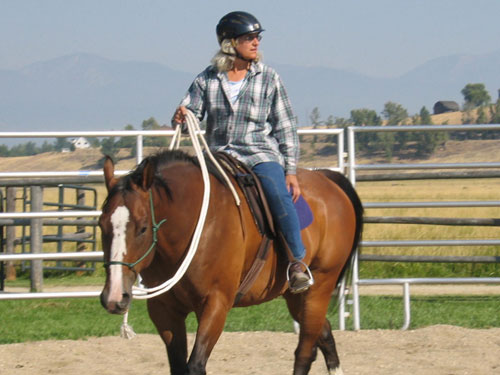 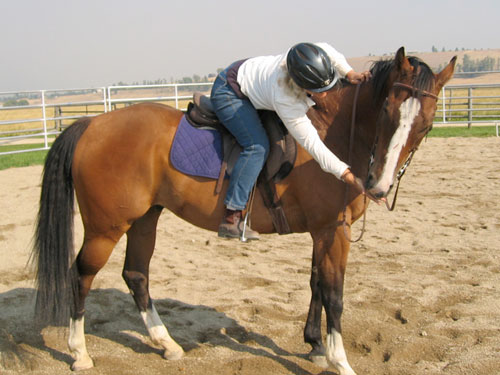 When the skeleton relates well to gravity, excessive holding and effort in muscles is unnecessary. Customary strains, stresses and aches fade away. By exploring the Feldenkrais Method®, you become a better rider by making yourself a more functional human being. The results translate throughout your life as well as in your riding.
Flexed Back: This position results in unsteady balance. The axis in the upper body is broken. The stress lines in the illustration indicate where a body in this position will have to contract muscles to hold the torso upright. This position actually defies natural balance, requiring effort and resulting in discomfort. It also creates a "heavy" and restricted leg. When mirrored by the horse he will travel heavy on the forehand. Neutral Pelvis: This position allows the rider's body to "rebalance" automatically. Notice that the axis of the upper body (above the hip joint) is unbroken and maintains its vertical balance without stress or strain. The automatic "rebalancing" action is a slight buoy effect. This position in riding enables the horse to release his base, travel freely and carry the rider with ease. Extended (Arched) Back: This position also results in unsteady balance. In this position, the rider is subject to being left behind the motion or easily thrown forward. The axis of the upper body is broken. The stress lines in the illustration indicate where a body in this position will have to contract muscles to hold the torso upright. When mirrored by the horse, he will travel head high and hollow backed. For further information, please check out Peggy Cummings’ web site for Connected Riding at http://www.connectedriding.com Be sure to read... What is Feldenkrais? |
|||||||||


